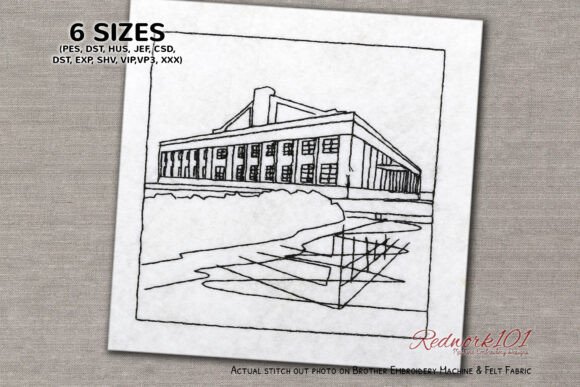
Huge Museum: A Timeless Embroidery Design for Personalized Gifts
As a designer running a personalized gift shop, every new embroidery file gets a thorough test before it goes near a customer's order. This week, I was planning a custom keepsake for a client who wanted a landmark-themed baby blanket and decided to review the Huge Museum of History and Industry design. This clean, detailed line drawing of an iconic building immediately stood out, not just for its subject, but for its potential as a versatile, emotion-driven gift.
First Impressions: Elegance, History, and Handmade Charm
Opening the Huge Museum of History and Industry embroidery file, my first thought was "classic." The mood is elegant and intellectual, yet it carries a warm, handmade charm because of its illustrative line style. It doesn't feel overly playful or sweet, but rather dignified and meaningful. This emotional appeal is key for gifts—it’s not just a decoration; it feels like a piece of history and personal connection. The detail level is impressive, promising a finished product that looks intentional and skilled, which directly boosts perceived value.
The Perfect Canvas for Meaningful Personalized Gifts
This design’s versatility is its greatest strength. For a baby embroidery project, like a blanket or nursery pillow, it becomes a sophisticated heirloom, especially for families connected to the city or field of history. For wedding gifts, embroidered on a pillow cover or kitchen towel for a couple who loves architecture, it’s uniquely personal. I envision it on custom tote bags for museum staff or visitors, aprons for history buffs, and as a stunning centerpiece on a family keepsake blanket.
For my shop and for other Etsy sellers or craft fair vendors, this is a fantastic small shop product. You can create an entire collection: embroidered towels, pillow covers, and blanket embroidery all featuring the same landmark theme. Using printable mockups to show customers how it looks on different items—a dark tote versus a light linen apron—can significantly increase buyer engagement and trust.
Where This Design Shines and Where to Take Care
The detailed lines are beautiful, but they require thoughtful application. On items like thick towels or textured fabrics, a good stabilizer is essential to maintain clarity. For baby embroidery on stretchy knit fabrics, you might need to adjust stitch density to prevent puckering. The design likely has fine elements, so small lettering or intricate architectural details should be stitched carefully and checked on scrap fabric first.
On curved surfaces like caps or rounded pillow edges, planning the hoop placement is crucial. Embroidering on dark fabric will require bright, high-contrast thread colors to make the lines pop. And for any product destined for frequent washing—like kitchen linens or baby items—a robust stitch setting and quality threads will ensure longevity, protecting that emotional connection for years.
Turning a Digital File into a Trusted Handmade Product
When I test a design like this, I’m judging how it transforms a digital embroidery file into a tangible handmade product. The Huge Museum of History and Industry excels here. Its clean execution makes finished items look professionally crafted, not homemade, which builds immediate customer trust. The theme itself adds a layer of storytelling, making the gift feel thoughtful and increasing its giftability immensely.
For product photography, this design is a winner. The clear lines and recognizable subject create a compelling visual, easy to style with props like books or vintage keys, appealing directly to a niche audience of history lovers, academics, and proud locals.
Practical Steps Before Your First Stitch
My process for integrating a new design always involves a checklist. For the Huge Museum of History and Industry, I recommend:
- Stitching a test sample on a scrap of your intended fabric texture.
- Experimenting with thread color contrast for both light and dark backgrounds.
- Confirming the necessary hoop size to capture the full design without cramping.
- Reviewing the stitch density to ensure it’s suitable for your fabric—delicate details can get lost on loose weaves.
- Comparing both light and dark fabric mockups digitally to help customers visualize their choice.
- After stitching, closely inspecting all small details to ensure they’ve translated perfectly.
- And critically, if you plan to sell the finished products, confirming your commercial embroidery licensing rights for this machine embroidery design before listing any Etsy listings or custom order previews.
Since the product description notes it’s perfect for projects inspired by iconic landmarks and mentions a box stitch, I’d pay special attention to that structural element in my test, as it can affect the overall stability of the design on the fabric.
A Design That Attracts a Thoughtful Customer
Finally, who would buy a gift featuring this embroidery? The customer is thoughtful. They’re looking for more than a generic present. They might be a grandparent wanting a baby embroidery blanket for a newborn in a city they love, a friend gifting a wedding keepsake to a couple who got engaged at that museum, or a tourist seeking a custom tote bag as a souvenir. This design attracts buyers who value education, heritage, and art—a wonderful niche for any gift shop owner or handmade seller.
In the category of School and Embroidery, this design bridges both worlds beautifully. It’s educational in theme and artistic in execution. By taking the practical steps to ensure perfect stitching, you can offer a personalized gift that feels both timeless and uniquely made, turning a simple digital file into a cherished object. The Huge Museum of History and Industry has passed my review; it’s ready to become a meaningful part of someone’s story.