Ghosts with Books: A Design Review for Business Merch
As an embroidery designer working with brands and retailers, my first step is always to evaluate a design for its commercial viability, not just its decorative charm. The title Ghosts with Books immediately paints a picture: it’s playful, quirky, and leans into a niche, likely educational or literary theme. For a small business, this isn’t just a ‘cool’ embroidery file; it’s a potential brand asset. Let’s review its application for merchandise, patches, and branded apparel from a professional standpoint.
The Visual Personality: Friendly & Handmade
The description suggests a design meant to add a fun accent. In my hands, evaluating for a client, this translates to a design with a friendly, handmade feel. It’s likely not overly sleek or corporate. For businesses like a cozy neighborhood café, an independent bookstore, a creative studio, or a boutique selling handmade goods, this visual personality is a strong starting point. It communicates approachability and creativity. However, it’s crucial to assess whether this ‘quirky’ feel aligns with the client’s desired brand identity—is it playful, rustic, or modern-classic? The first impression leans toward playful and decorative, which can be perfect for certain markets.
Real-World Business Applications
When a small business invests in a machine embroidery design, they need versatility. Here’s how Ghosts with Books could perform across common commercial embroidery projects.
Embroidered Patches for Product Labels & Merch
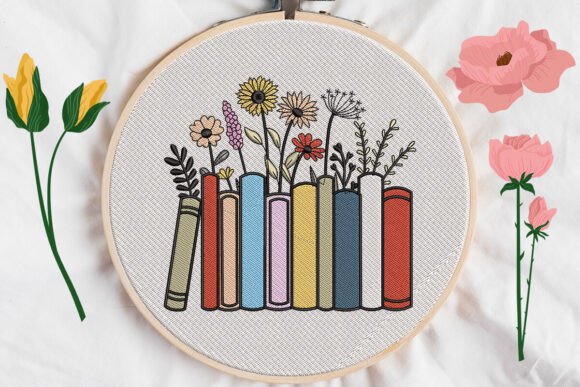
For a handmade shop or Etsy seller, an embroidered patch can serve as a premium product label sewn onto tote bags or aprons. This design, with its likely detailed outlines, needs to be tested at a small patch size immediately. Can it be scaled down to a 2-inch circle for a bag tag without losing character definition? The ‘books’ element will be key—tiny details can become muddy. A successful patch here boosts product value and creates visual consistency across a line of goods.
Staff Uniforms & Apron Embroidery
Imagine a bakery or florist using this on an apron or a staff polo. As a chest logo accent or sleeve detail, it must withstand frequent washing and maintain clarity. The stitch density and choice of thread colors against the uniform fabric (often dark for kitchens) are critical. I’d advise creating a printable mockup first to see how it interacts with the client’s apron color. Does it look professional and engaging, or just decorative? For a business, it should enhance customer trust and brand recognition.
Cap Embroidery & Tote Bag Design
Cap embroidery on curved surfaces requires robust, simplified designs. Before committing, test Ghosts with Books on a cap front mockup. Small, intricate ghost features might not translate well. For a tote bag design, the scale can be larger, making it a great mark for a bookstore’s customer gift or event merch. Here, the design’s playful nature directly engages the buyer, turning a simple bag into branded merchandise.
Commercial Embroidery for Boutique Merchandise
A pet brand or local business might use this on limited-run t-shirts or towels as promotional items. Its ‘School’ categorization hints at a theme perfect for teacher gifts or library events, opening a specific merchandise niche. The finished product must look intentional, not like a generic decoration. This requires pairing the design with high-quality custom apparel and proper production techniques.
Where to Use with Care: Designer Notes
Not every design is universal. Based on the description, here are key considerations before using Ghosts with Books for small business merch.
- Test at Small Scale: Always hoop a sample at the intended patch or cap size. Check if the ‘books’ and ghost details remain distinct.
- Color & Contrast: Run a test in black and white thread on your intended fabric first. This reveals the design’s form without color distraction, crucial for dark uniforms.
- Fabric Texture & Stabilizer: The design’s success on towels or textured home decor hinges on using the correct stabilizer. A failed test on a fluffy towel wastes time and money.
- Compare with Brand Assets: Place the embroidered sample beside the client’s other branding—logo, fonts, colors. Does Ghosts with Books complement the overall identity or clash?
- Confirm Licensing: The product type is Embroidery, meaning it’s a digital embroidery file. Before any commercial production, verify the commercial embroidery license terms. Never assume.
- Create a Client Mockup: Never proceed without a visual approval. Show the client how it will look on the actual apron, cap, or tote bag.
Impact on Brand Identity & Professionalism
A design like this isn’t neutral. Its application directly affects how a business is perceived. Stitched neatly onto a high-quality apron, it can elevate a handmade product feel, suggesting care and personality. On a staff shirt, it can foster a friendly, approachable team identity. However, if the embroidery is poorly executed—due to wrong hoop size, poor contrast, or unsuitable fabric—it can undermine professionalism. The goal is to use the design’s quirky charm to strengthen the brand story, not dilute it. For a creative studio or literary café, it could be a perfect, recognizable symbol that boosts buyer engagement.
Final Practical Advice
My review always ends with actionable steps. For Ghosts with Books:
- Treat it as a business asset, not just a decorative file.
- Invest time in testing on real, sample fabrics and garments.
- Match its playful style with brands that value a handmade, niche aesthetic.
- Prioritize applications where its scale and detail can shine—like larger tote bags or apron pockets—over challenging small cap fronts.
- Always, always confirm the technical details and license for commercial embroidery projects before production begins.
In the hands of a thoughtful business owner or apparel decorator, Ghosts with Books can transform from a fun machine embroidery design into a meaningful piece of branded merchandise. The work happens in the evaluation and testing phase, ensuring that the final stitch reinforces the brand, delights customers, and stands up to real-world use.